
Stop Flying Blind.
Predict Your Cash Flow.
82% of small businesses fail due to cash flow problems. The difference between a thriving startup and a shuttered dream comes down to one skill: accurate cash flow forecasting.
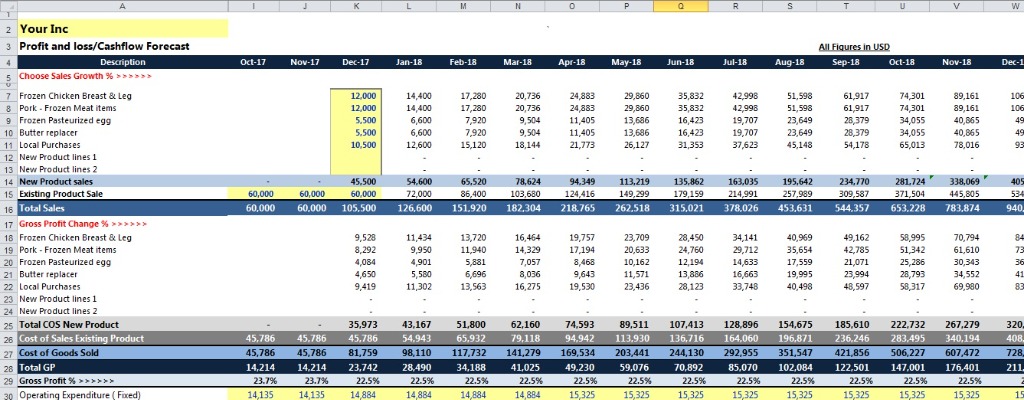
See the Cash Flow Model in Action
Watch this quick overview to understand how our template helps you predict and manage your startup's cash flow with ease.
The Three Cash Flow Killers Most Startups Miss
You can be profitable on paper and still go bankrupt tomorrow if you run out of cash. Here is why it happens:
Mismatched Terms
Offering 30-60 day terms to win customers while paying suppliers upfront creates a cash vacuum that grows with every sale.
Seasonal Swings
E-commerce, restaurants, and FMCG companies often experience extreme seasonal fluctuations that catch them off guard.
Growth Traps
Rapid growth triggers cash crises. Each new sale requires inventory, labor, and operations before the revenue arrives.
Why Excel Beats Expensive Software
SaaS platforms promise automated forecasting and AI insights, costing $50-500+ per month. For most startups, this is overkill. Here is why Excel remains the superior choice:
Complete Customization
Add new revenue streams, adjust costs, or model seasonal patterns instantly without developer dependencies.
No Accounting Degree Required
A well-designed template handles the complex formulas. You just input your business assumptions.
One-Time Cost
Avoid the $3,500+ cost of a 3-year SaaS subscription. Excel templates are yours forever.
Works Offline & Integrates
Excel doesn't require an internet connection, won't lock you out, and integrates easily with your existing workflow. Plus, you can use Power Query to pull in your messy bank data automatically.
How to Build a Cash Flow Forecast: Step-by-Step
Creating an effective model involves these core components. Watch the full video tutorial below or read the step-by-step guide.
Full Tutorial: Build Your Cash Flow Forecast
Follow this comprehensive video guide to set up and customize your cash flow forecasting model step-by-step.
Forecasting Cash Collections
Collections are more complex than revenue. January net-30 sales don't become cash until February. Your forecast must reflect terms, collection rates (e.g., 70% in 30 days, 10% bad debt), and seasonal patterns. (Pro tip: use SUMIFS to easily aggregate sales data by month).
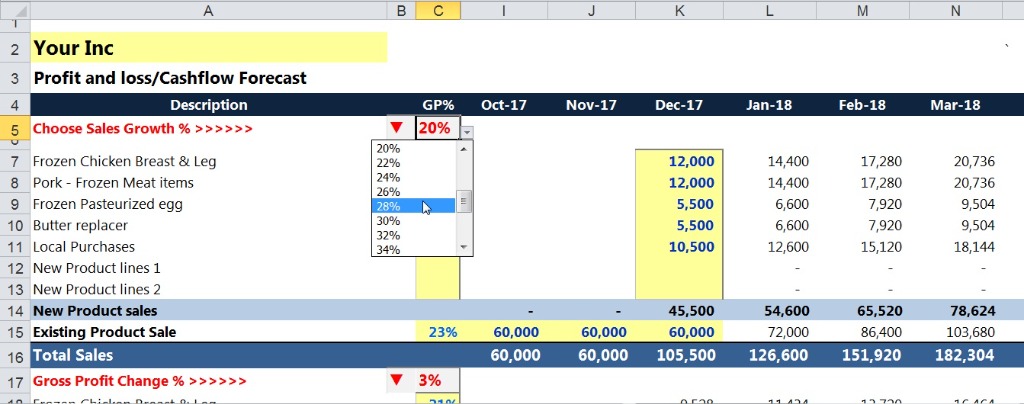
Managing Supplier Terms & COGS
Model cash outflows precisely. Account for supplier credit (30-45 days vs upfront), inventory turnover, direct labor, and variable costs like packaging and transaction fees. Match outflows to inflows to find your cash gap.
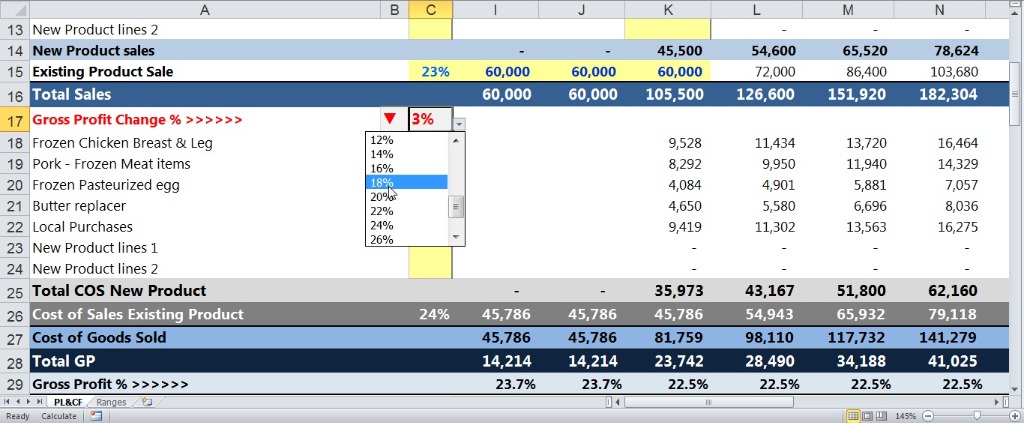
Planning for Seasonality
Seasonal businesses must accumulate surplus cash during peak months to survive slow periods. Calculate your minimum survival burn rate and map out exactly how much buffer you need.
Modeling Credit & Interest
Assume you will need temporary financing. Build revolving credit lines into your model so you can accurately forecast interest expenses (8-12% APR) and repayment timing when cash frees up.
Key KPIs Built Into Our Model
Revenue & Sales Growth
Track monthly revenue by product line or channel to spot trends.
Gross Profit Margin
Reveals profitability of specific offerings.
Operating Expense Ratio
Monitor efficiency. If it rises, you're spending faster than you're growing.
Cash Conversion
Days Inventory + Sales - Payables.
Burn Rate & Runway
Months of cash remaining until zero.
Break-Even Point
Timeline to sustainable profitability.
Excel vs. Software: Making the Right Choice
Choose Excel templates if you:
- Have under $1M in annual revenue
- Operate a straightforward business model
- Need maximum customization flexibility
- Want to avoid recurring subscription costs
- Prefer one-time setup with ongoing control
Consider Software if you:
- Generate $5M+ with complex operations
- Need real-time integration with multiple systems
- Have a finance team using advanced features daily
- Require multi-user role-based permissions
- Can justify $100-500/month continuously
Industries That Benefit Most
E-commerce
Juggle inventory purchases, platform fees, advertising costs, and seasonal sales spikes.
Restaurants & Food Service
Balance daily cash challenges with perishable inventory, variable labor, and seasonal patterns.
Consulting & Services
Forecast cash collections across multiple clients with varying payment terms and milestones.
FMCG
Manage high inventory turnover, thin margins, and seasonal demand.
Seasonal Businesses
Accumulate cash during peak periods to survive slow seasons smoothly.
Save 40+ Hours.
Get the Ready-Made Template.
Building a robust model from scratch takes expertise and weeks of iteration. Download the exact financial model we use for client valuations and fundraising.
- Complete 3-statement financial model (Income Statement, Balance sheet and Cashflow (Direct and Indirect methods))
- Customer collection & supplier payment logic
- Seasonal business planning modules
- Automatic KPIs and dashboard visualizations
- Revolving line of credit triggers automatically
- No accounting degree required
Startup Financial Model
Available for Excel & Google Sheets
15-day money-back guarantee
Also looking to master financial modeling?
We also offer a comprehensive video course teaching you how to build this exact model from scratch. Understand the principles and speak confidently with investors.
Take Action Before Cash Flow Problems Take Your Business
The startups that survive aren't necessarily those with the best products. They're the ones that manage cash flow proactively and anticipate shortfalls. Don't wait until you're scrambling to make payroll. Start forecasting today. If you need help, feel free to explore our downloads section for additional premium tools.
Get the TemplateFrequently Asked Questions
What is a cash flow forecast, and why is it important?
It tracks the movement of cash in and out over a specific period. It helps you plan for future cash needs, identify gaps, and avoid sudden bankruptcy.
Short-term vs long-term planning?
Both! Short-term (monthly) helps with weekly operations and payables. Long-term (yearly) helps with strategic fundraising and growth.
How often should I update it?
Ideally, monthly. Regular updates ensure you can catch conflicting payment cycles and make decisions before cash actually runs out.